Living
Weather & Climate in Kelowna
Facts checked · How we check facts
In this guide:
Kelowna has a semi-arid climate with hot, dry summers, cold but manageable winters, four real seasons and nearly 2,000 hours of sunshine a year. With mountains on both sides of the valley and the lake in the middle, it stays drier than the coast and milder than the Prairies. Here's what each season actually feels like, plus wildfire smoke, how Kelowna compares with other cities and what to wear.
Kelowna right now
Data: Environment and Climate Change CanadaFull forecast BC Wildfire map
Summer (June–August)
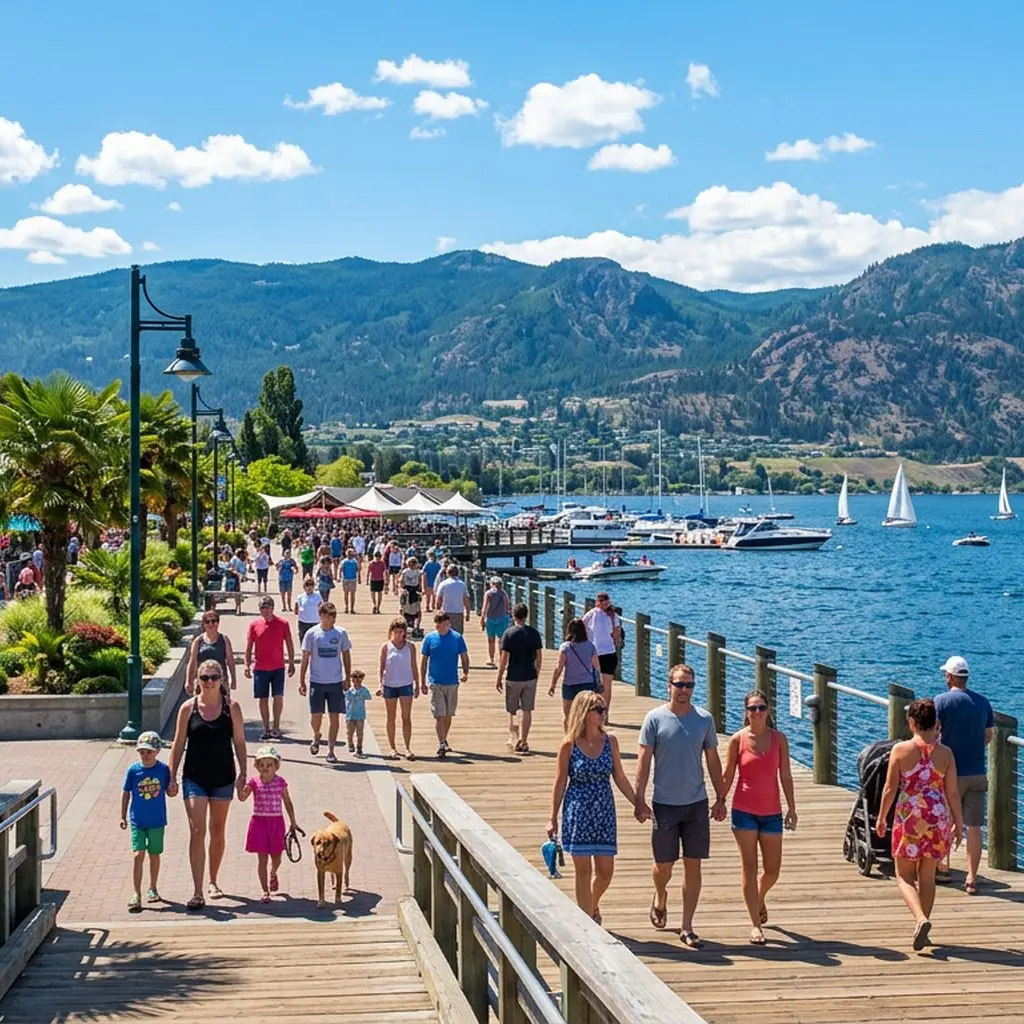
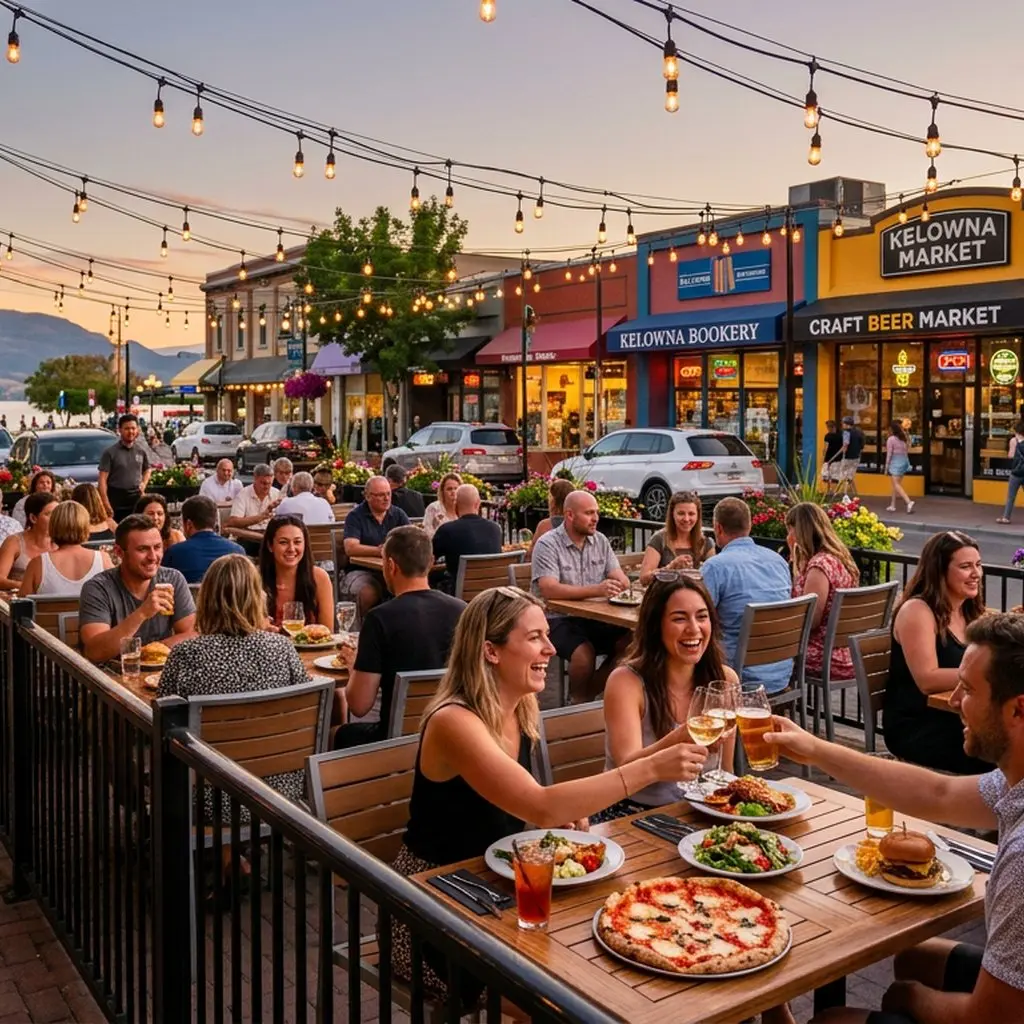
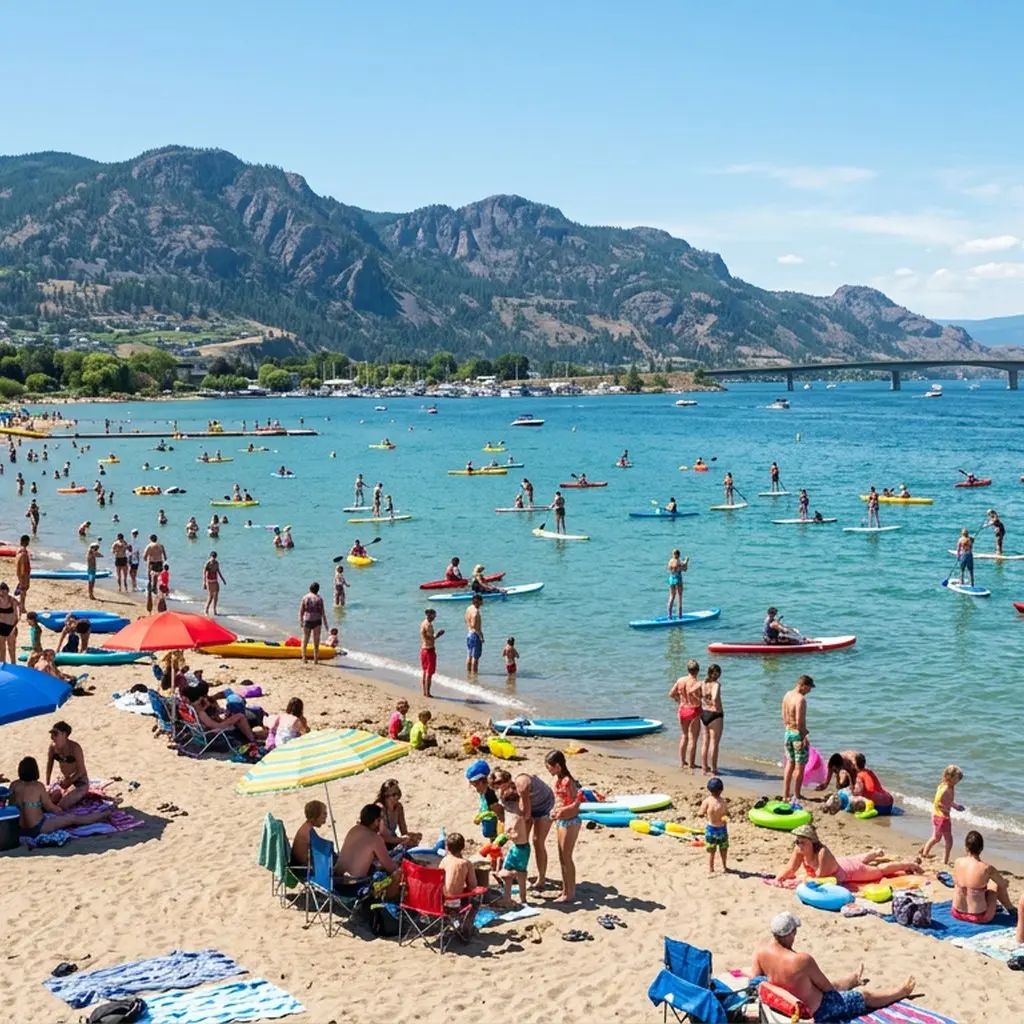
Kelowna summers are hot and dry, with average highs around 24–29°C (75–84°F), and the occasional heat wave pushes past 38°C. Humidity is low (average relative humidity under 40%), so even the hot days feel easier than a humid Ontario or Maritime summer. By mid-July the lake warms to 22°C+, warm enough for swimming, paddleboarding and kayaking, and evenings drop to 15–18°C, which keeps the patios busy late.
It barely rains: Kelowna averages only about 115 mm across the entire summer, so gardens and lawns need regular watering (subject to city watering restrictions). It's also peak tourist season, so expect busy beaches, wineries and restaurants.
Wildfire Smoke
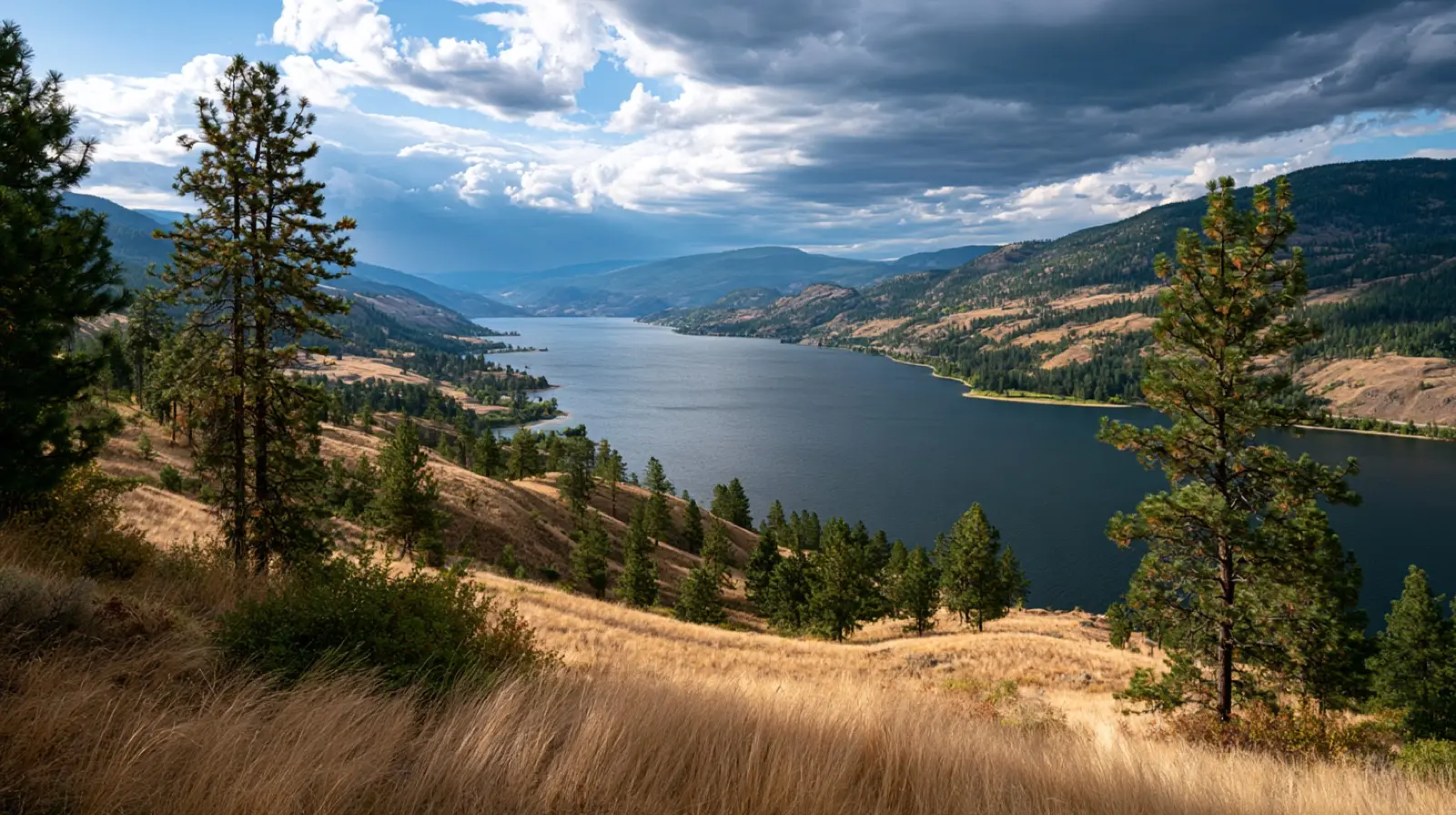
Wildfire smoke is the biggest drawback of a Kelowna summer. In a typical year it drifts in from regional fires for 1–3 weeks, most often in August, cutting visibility and air quality, and in heavy smoke events the air quality index (AQI) can reach unhealthy levels that limit outdoor activities. Some summers have very little smoke; others have weeks of it. The BC Wildfire Dashboard and AQHI (Air Quality Health Index) apps give you real-time readings, and most residents adapt by staying inside on the worst days, running air purifiers (a good investment for any Kelowna home) and moving outdoor plans around.
Air Quality Tip: Get a HEPA air purifier for your main living space ($150–$400). When the smoke rolls in, keep the windows closed and run the purifier. Check the AQHI at weather.gc.ca; readings below 4 are considered low risk for most people.
Fall (September–November)
Fall in Kelowna, September through November, is harvest season, and many locals will tell you it's the best season here. September gives you warm days (20–25°C), cool nights, minimal rain and vineyards turning gold and red, while wineries host events, farm stands overflow with peaches, apples and pears, and the city relaxes as the tourists leave. October brings crisp mornings and the first frost, usually mid-month, with daytime temperatures of 10–18°C, and it's when Knox Mountain and the lakeshore trails are at their best.
November turns grey and cooler (3–8°C), with occasional rain, and the first snowflakes may appear on the surrounding mountains. Wine clubs move to indoor tastings and the city quiets down.
Winter (December–February)
Kelowna winters are cold but manageable, with average lows of about -5 to -6°C (21–23°F) and occasional cold snaps to -15°C or colder. January is the coldest month, with average highs around 1°C and lows around -6°C. The valley gets about 90 cm of snow across the entire winter, far less than the 750 cm Big White ski resort receives about an hour's drive up the mountain, and snow in the city usually melts within a few days, though shaded areas and north-facing slopes hold it longer.
The city and Ministry of Transportation keep the roads well maintained. What surprises newcomers is the cloud: sunny winter days happen, but valley cloud is common, and Kelowna actually averages less winter sunshine than Vancouver or Calgary. The lake rarely freezes (only in exceptional cold snaps), and its moderating effect keeps out the extreme cold the prairies get.
Winter Driving Note: Winter tires (M+S rated or with the mountain/snowflake symbol) are legally required on most BC highways from October 1 to March 31, and to April 30 on many mountain routes, including the Coquihalla. You may not need them every day in the valley, but they're essential for trips to Big White, the Coquihalla Highway and any hillside neighbourhood during snowfall.
Spring (March–May)
Spring in Kelowna comes early and moves fast. By mid-March it's 8–12°C and the snowline is retreating up the mountains. April is cherry and apple blossom season, when the orchards around East Kelowna and Lake Country fill with pink and white.
By May it's 18–22°C and outdoor season starts in earnest: golf courses open, patios fill up, and the lake (still 12–15°C) gets its first swimmers. Rainfall is moderate, about 90 mm across March–May, against Vancouver's 250+ mm over the same period. It's a good time to visit, too, before the summer crowds arrive.
How Does Kelowna's Weather Compare to Other Canadian Cities?
Compared with other Canadian cities, Kelowna is far drier than Vancouver, milder in winter than Calgary or Edmonton, and less humid in summer than Toronto.
vs Vancouver
Annual sunshine is about even (about 1,950 hours vs Vancouver's 1,940), but Kelowna gets far less precipitation (about 390 mm vs 1,160 mm annually). Summers are much hotter and drier, and winters are colder and, in midwinter, often greyer. Overall, you trade grey drizzle for blue skies and light snow.
vs Calgary
Calgary actually gets more sunshine (about 2,400 hours a year to Kelowna's 1,950), but Kelowna's winters are milder (January averages about -3°C vs Calgary's about -8°C) and there are no chinook wind cycles. -30°C cold snaps are very rare, since the lake moderates temperature swings. Summer temperatures are comparable, and Kelowna adds the lake and wine country.
vs Toronto
Kelowna has less humid summers and much less winter precipitation, with no ice storms or heavy lake-effect snow. Kelowna's dry summer heat is far more comfortable than Toronto's muggy 30°C+ days.
vs Edmonton
Kelowna's winters are much milder. Edmonton averages -10°C to -20°C with regular -30°C or colder events. It does get more sun (about 2,300 hours to Kelowna's roughly 1,950), but Kelowna's temperatures are far more moderate, and you have the lake.
What to Wear by Season
Dressing for Kelowna means light, breathable clothing and sun protection in summer, layers in spring and fall, and a jacket rated to -15°C with waterproof boots in winter.
Summer
Shorts, t-shirts, sundresses and sandals: light, breathable clothing is everyday wear. UV levels are high in the Okanagan, so bring a wide-brimmed hat and good sunglasses, plus a light layer for evening patio dinners when the temperature drops.
Fall
Fall is the most comfortable season to dress for, and layers are the key: a light jacket in September, a warmer fleece or down jacket by November, and waterproof shoes for the occasional rain.
Winter
A good winter jacket (rated to -15°C), waterproof boots, gloves and a toque. You won't need the extreme cold-weather gear people wear in Calgary or Winnipeg, but quality layers make a real difference. Add ski gear if you're heading up to Big White.
Spring
Wear layers you can shed as the day warms, like light sweaters and jackets, plus a rain jacket for spring showers. By May you're back in nearly summer clothes.