
Education
Higher Education in Kelowna
Facts checked · How we check facts
In this guide:
Kelowna's post-secondary schools are UBC Okanagan, Okanagan College and private career colleges, which together serve over 20,000 students. This page is for high school grads, people changing careers and newcomers who need to upgrade their credentials, and it covers what each school offers and what student life in the Okanagan is really like.
UBC Okanagan (UBCO)
UBCO is a campus of the University of British Columbia that opened in 2005 and is still growing. It has over 11,000 students in 8 faculties: Arts & Social Sciences, Creative & Critical Studies, Education, Engineering & Applied Science, Health & Social Development, Management, Medicine (Southern Medical Program) and Science. As a research university, its strengths include sustainability, data science, health sciences, engineering and Indigenous studies.
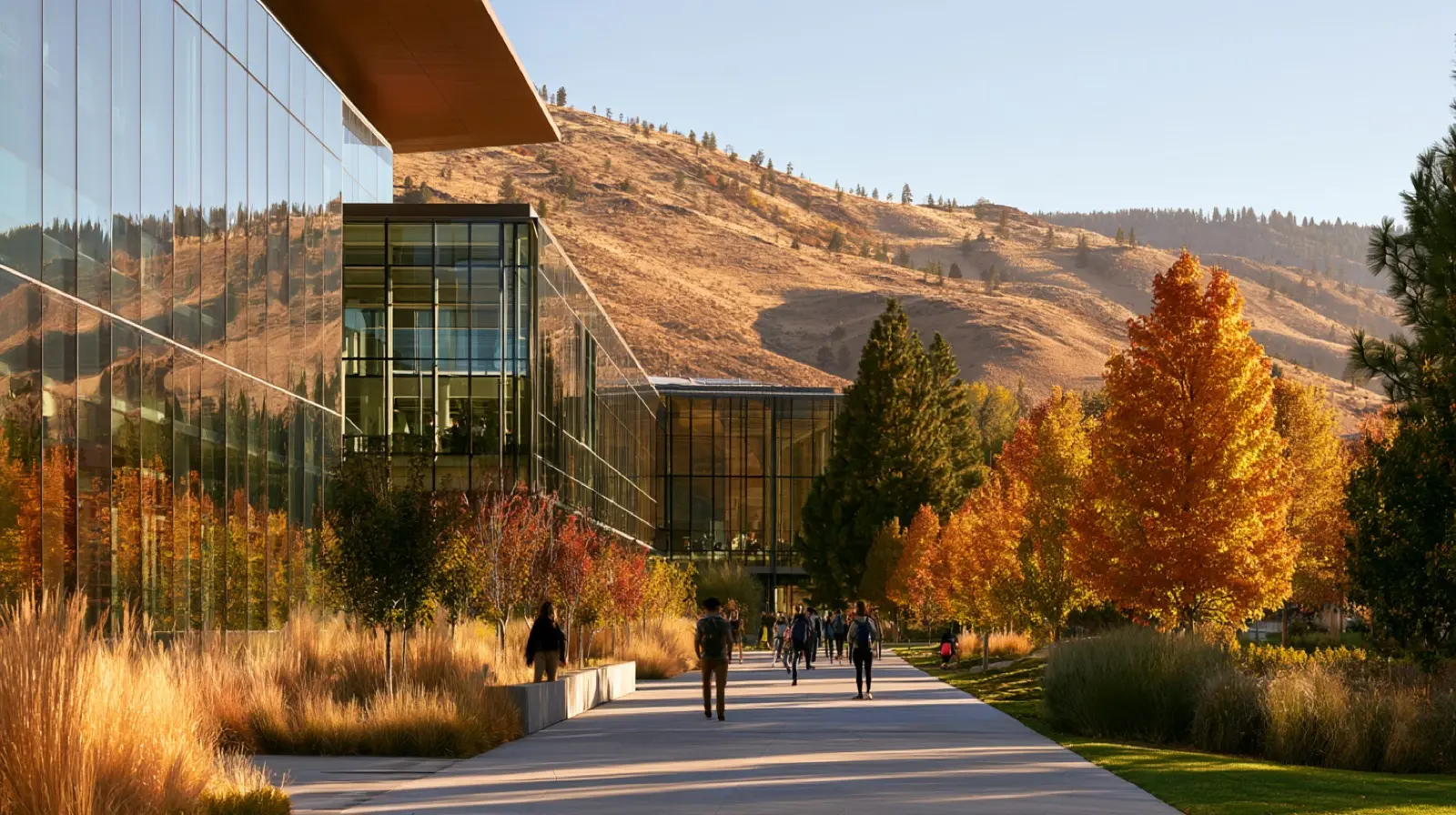
The purpose-built campus sits in the university district near the airport, with residences, sports facilities, a library and a student commons. Tuition depends on the program, and international students pay much more than Canadian students, so check UBC Okanagan's tuition pages for current figures.

Okanagan College (OC)
Okanagan College serves more than 15,900 students a year across four campuses (Kelowna, Vernon, Salmon Arm, Penticton). The Kelowna campus on KLO Road is the largest and has the most programs. OC offers diplomas, certificates, trades apprenticeships, university transfer courses and some degree programs.
Its strongest areas include business, computer information systems, health (practical nursing, health care assistant), culinary arts and trades (electrical, plumbing, carpentry, welding, automotive). Tuition for Canadian students is well below university tuition; check Okanagan College's site for current figures.
Trades Apprenticeships
OC is a major trades training centre, with apprenticeships in electrical, plumbing, carpentry, welding, automotive and heavy-duty mechanics that mix classroom learning with on-the-job training. Skilled trades are in high demand locally, so grads usually find work.
University Transfer
The lower-cost route to a degree: complete first and second year at OC's lower tuition, then transfer to UBCO, UBC Vancouver, SFU, UVic or other BC universities. Many universities have guaranteed admission deals with OC, which makes this a cheap path to a degree.
Continuing Studies
Part-time and evening courses for working adults in business, technology, leadership and personal growth, useful for newcomers who need to upgrade skills or credentials.
Private Institutions
Kelowna's private options include the Centre for Arts and Technology, a career college for digital and creative programs, and Sprott Shaw College, a career college with hands-on diploma programs.
Centre for Arts and Technology
A private career college with focused programs in 3D animation, game design, graphic design, audio engineering and digital marketing. Check the school's site for current program lengths and tuition.
Sprott Shaw College
A private career college with hands-on diploma programs in healthcare (medical office assistant, practical nursing), business, early childhood education and legal studies. Programs start several times a year, so you don't have to wait for September.
Student Life in Kelowna
Student life in Kelowna means studying outside a big city, which is the reason a growing number of students choose it. At UBCO you get residence (guaranteed for first-year students), varsity sports (Heat teams compete in U Sports), 100+ student clubs and research jobs. Living costs are lower than in Vancouver, with noticeably cheaper rent.
Add the outdoors, a growing social scene and the wineries (if you're of legal age), and it's a real alternative to the big university cities. Students live in campus residences, shared houses in nearby neighbourhoods and apartments along the Highway 97 corridor. You can find part-time work in restaurants, hotels, stores and the growing tech sector.
Student Budget: Plan for the full year, including tuition, housing, food, books and personal costs; both schools publish cost estimates. All in, Okanagan College usually costs a lot less than UBCO. Co-op programs at both give you paid work experience and income while you study.